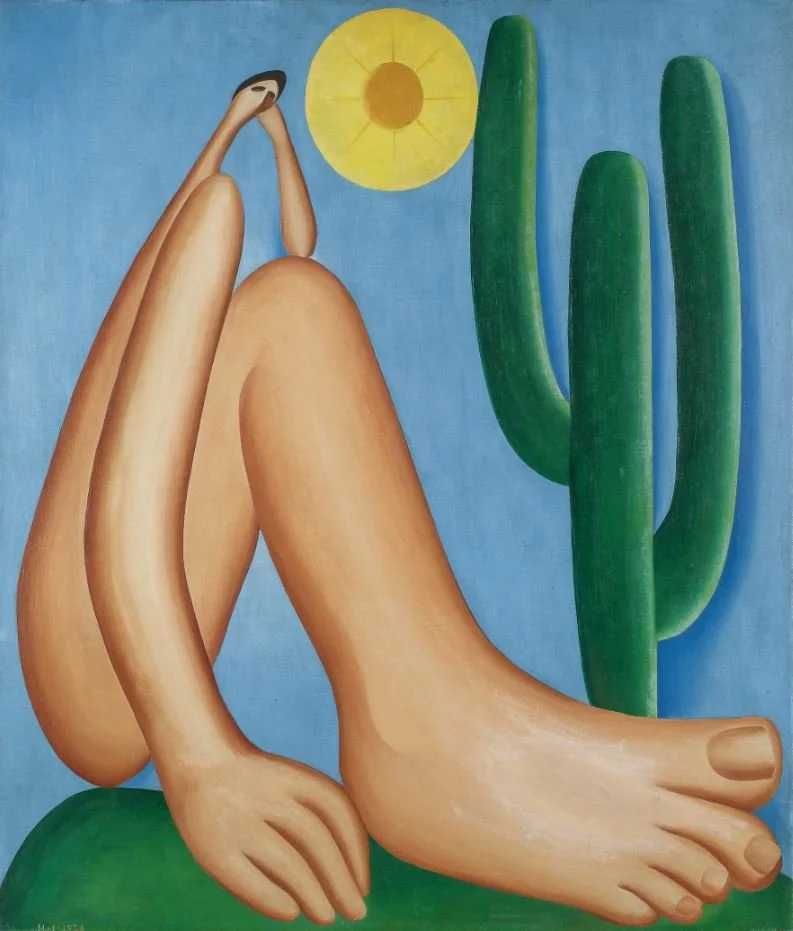
Tarsila do Amaral (1886–1973)
One of the most iconic figures in Brazilian art and a leading voice of the Modernist movement. Deeply inspired by Brazil’s landscapes, traditions, and multicultural identity, she created a distinctive visual language marked by bold colors, simplified forms, and a playful sense of scale.
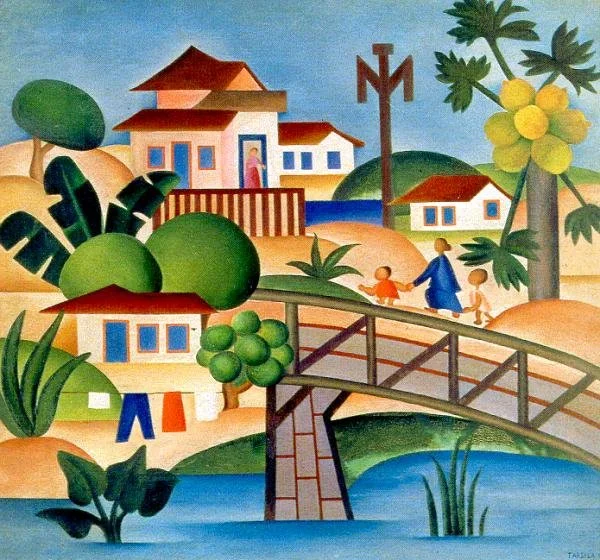
Her work Abaporu (1928) became a symbol of the Anthropophagic Movement, which proposed “digesting” foreign influences to create a uniquely Brazilian culture. Tarsila’s paintings reflect both her international experiences in Europe’s avant-garde circles and her commitment to celebrating Brazilian themes, from rural life to urban modernity.
Today, she is recognized as a pioneer who helped reshape Brazil’s cultural identity and elevate Brazilian art on the world stage.